
Can other trades keep working on the floor?
Often yes, outside an exclusion zone. They cannot keep working under the cut, and they should expect water and a short noisy spell.

Concrete cutting on an empty shell is mostly a question of method. The same cut on a live Dubai floor is a question of who else is there. Water, noise, a falling core and slurry on a finished ceiling are what delay the job, not the diamond. A short preparation list prevents that.
Mark the holes or the opening on the concrete, not only on a drawing in the site office. Diameters or the width and height should be written beside the mark. If the engineer has to approve it, get that done before the mobilisation, not while the rig is idling. Marks on a post-tension slab should be the accepted marks, as described in the post-tension guide.
Diamond cutting is wet. The crew needs a reliable water point and somewhere to put the slurry. Slurry is concrete dust in water. On a live floor it stains stone, tracks into lifts, and should not be tipped down a drain that was not meant for it. If the ceiling below is finished, protection and a catchment tray matter more than the cutting rate.
Power for the saw is the same conversation. Write in the order who provides water and power, or the first hour becomes a search.
Nobody stands under a core or under a wall-saw offcut. The floor below needs a barrier and, where a piece could drop, a deck or a crash deck agreed with the main contractor. Above, an exclusion zone keeps other trades out of the water and out of the line of the blade. Lifts and finished lobbies need a path for hoses that does not ruin them.
Hospitals, malls and occupied towers often move this work to night. If that is the case, say so when you ask for the quote, because the rate and the supervision both change. Slab and floor sawing in a public area has the same constraint.
A core is heavy. A door-sized block is heavier. Decide whether it is broken on the spot, carried to a hoist, or craned. “We will see” is how a cut piece sits in a corridor until the next day. Debris disposal is often excluded from the cutting price. If you need it included, ask.
Send a photo of the area as it is today, not as it was last month. Book through the contact page and mention that the building is live.
Often yes, outside an exclusion zone. They cannot keep working under the cut, and they should expect water and a short noisy spell.
Agree it in the quote. Many sites provide a hose point and a power point. A crew that arrives to neither will lose the morning.
It should be caught and removed, not washed into a floor drain or onto a finished ceiling below. Say if the finishes are already in.
More guides
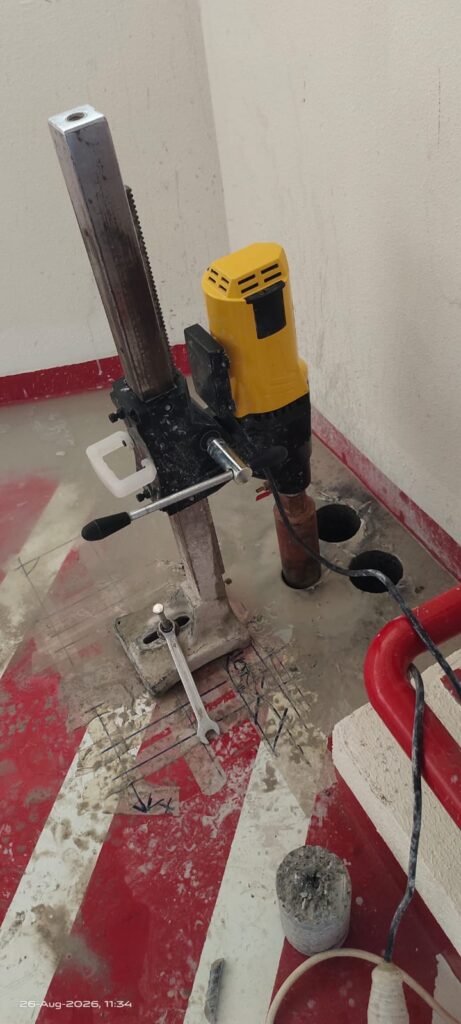
Stitch drilling overlaps round cores to form an opening when a wall saw cannot be mounted. The edge needs more making-good.
Read more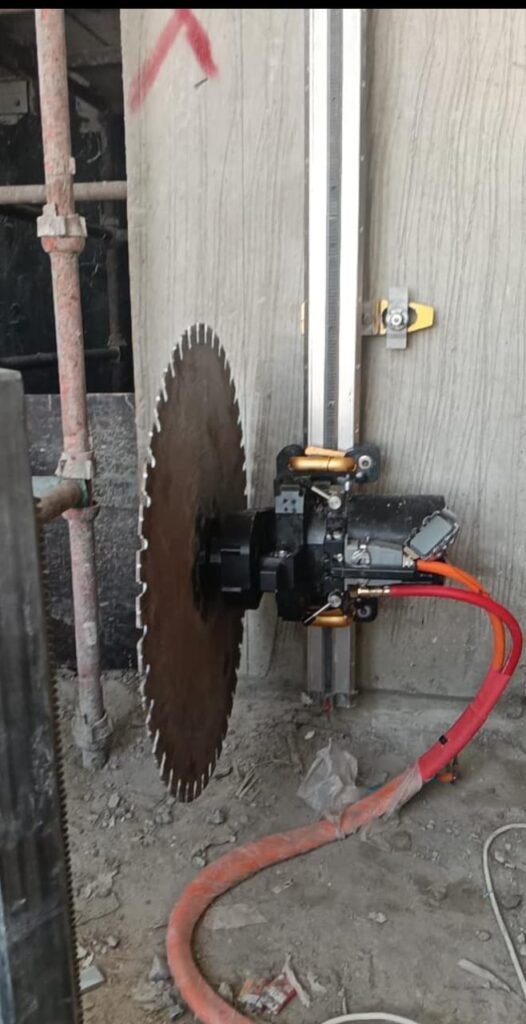
Mark the structural opening, not the frame size alone. A wall saw can then leave a square edge for doors, windows and AC ducts.
Read more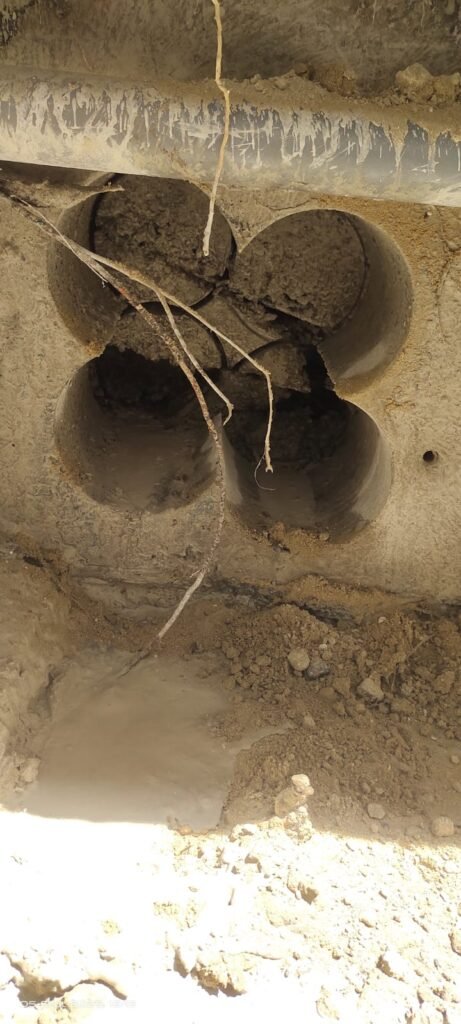
A wall saw wants a straight face and a blade-sized cut. A wire saw loops diamond wire through thick beams, pile caps and awkward sections.
Read more