
Is stitch drilling as neat as a wall saw?
No. The edge is a series of arcs and needs trimming or making-good before a frame sits cleanly. Use it when the saw cannot be mounted, not as a first choice for a door.

A rectangular opening wants a wall saw. Sometimes the wall will not take a track: the face is too short, the access is a riser, or the finish cannot be anchored into. Stitch drilling is the fallback. It overlaps core holes until the middle can be broken out. It works. It is not as clean, and it should be chosen with that in mind.
The crew drills a line of overlapping holes with a core drill around the opening. The cores knit together. The centre is then split out and the ears of concrete between holes are trimmed. The line of the opening follows the holes, so set-out has to be tighter than a single sleeve, not looser.
Because you are drilling many holes, the price follows the perimeter and the diameter, not a single “opening” rate. Ask for it to be quoted that way.
If a track can be bolted and the blade can pass, a wall saw is faster and the edge is straight. Frames sit better. There is less making-good. Use stitch drilling when that setup is genuinely impossible, or when the opening is an odd shape the blade cannot follow.
The decision sits beside wall sawing versus core cutting. Very thick sections may skip both and go to a wire saw.
A stitched edge is scalloped until it is trimmed. If a door or louvre has to sit the next morning, include that trimming in the scope or give the frame fixer time. Do not promise a sawn finish if you have booked stitch drilling.
On a post-tension slab, every overlapping hole is another cable you must miss. Scan first. The notes in core drilling a post-tension slab apply to the whole perimeter, not only the first hole.
Door and duct jobs that can take a saw are usually better kept on the saw, as described in the openings guide. If you already know the track will not fit, say “stitch drill” in the quote request so the barrels and the time are both on the visit.
No. The edge is a series of arcs and needs trimming or making-good before a frame sits cleanly. Use it when the saw cannot be mounted, not as a first choice for a door.
Yes. The cores overlap so the centre can be broken out. The quantity of holes is much higher than a single sleeve, so the price is not "one opening".
Only on accepted marks after scanning. Every extra hole is another chance to meet a tendon, so the set-out matters more, not less.
More guides
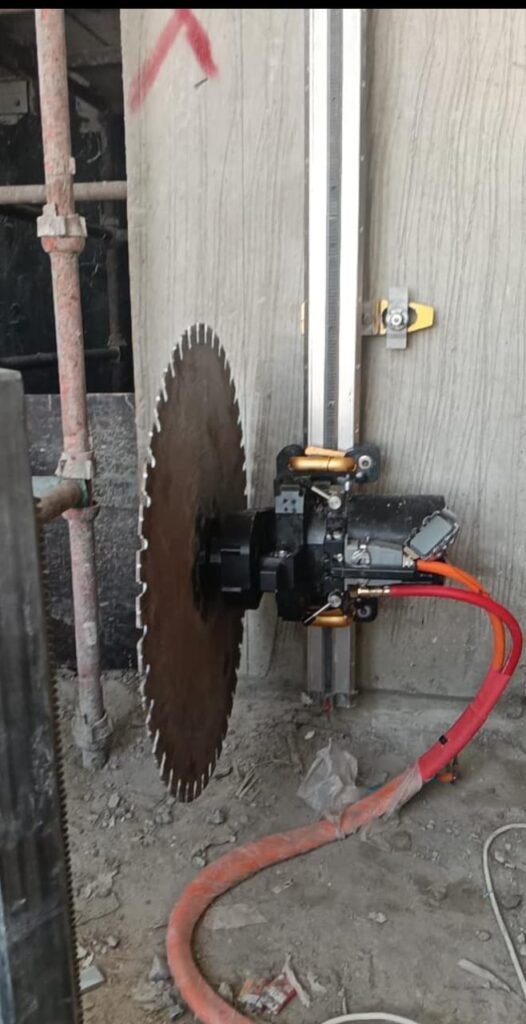
Mark the structural opening, not the frame size alone. A wall saw can then leave a square edge for doors, windows and AC ducts.
Read more
On a live Dubai floor, the cut goes smoothly when water, slurry control, protection below and the set-out are ready before the crew arrives.
Read more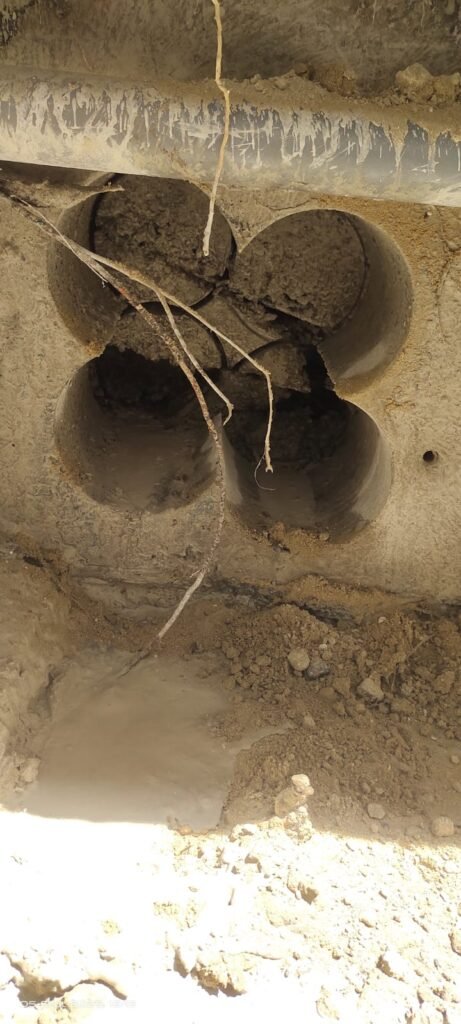
A wall saw wants a straight face and a blade-sized cut. A wire saw loops diamond wire through thick beams, pile caps and awkward sections.
Read more